Bobolink AI
AI learning assistant for busy professionals to upskill without compromising momentum on real work and responsibilities
AI B2B SaaS Agent
6 months
Lead Product Designer
01
What Is It?
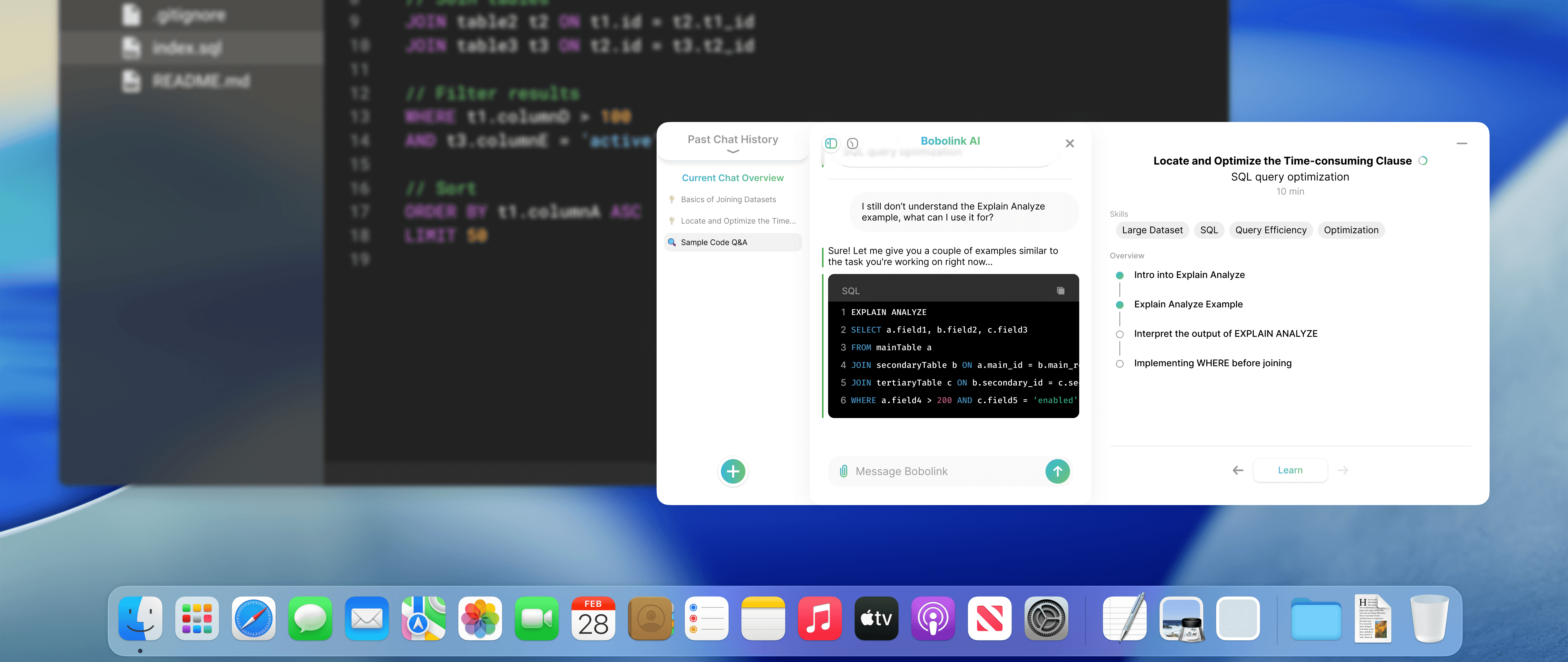
Bobolink AI is an AI desktop assistant widget that helps data science teams learn while they work. Instead of relying on external courses or tools, Bobolink delivers just-in-time support, enabling enterprise teams to upskill as they complete their workflows.
As the lead designer, I shaped Bobolink’s core product from zero to one: defining product strategy, rapidly prototyping key flows, and using testing insights to drive design decisions. I collaborated closely with leadership and cross-functional teams to transform a raw AI model into a usable, desirable, and delightful shipped product.
02
Have a Look
03
My Impacts
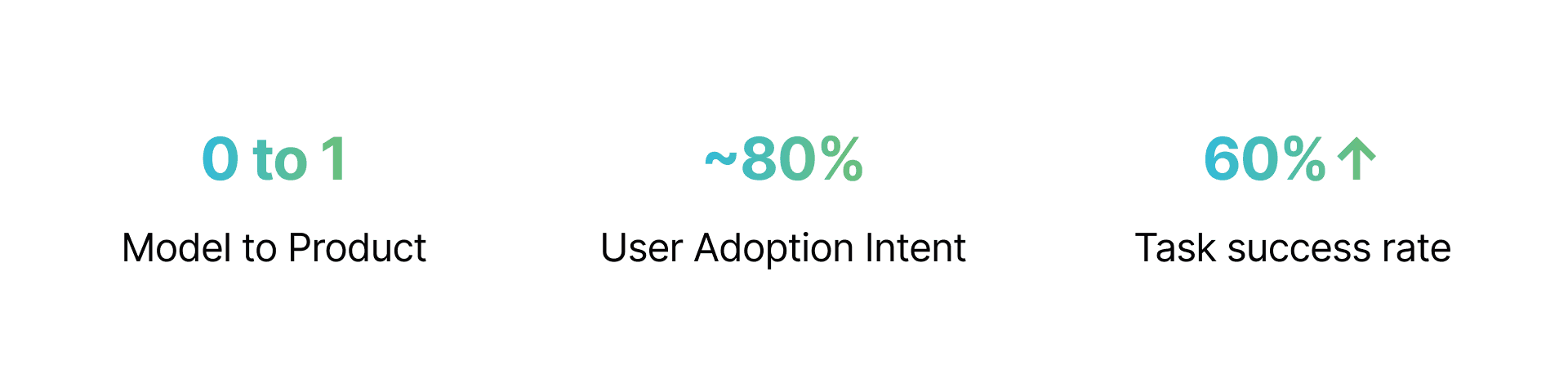
Over eight months, my team and I transformed a raw algorithm into a shipped product that addresses real market needs, supporting Bobolink’s transition from pre-seed to investor-ready traction. Later testing showed around 80% of users expressed a strong preference to adopt Bobolink into their workflow, citing, “I usually use ChatGPT, but this will be very useful for us data science practitioners to learn.” Through this journey, we also raised task success rate and user confidence by 60%.
04
Behind the Scenes
What Is the Problem?
To navigate the ambiguities surrounding the problem space, I first led preliminary design research using mixed methods: interviews, directed storytelling, literature reviews, and competitive analysis.
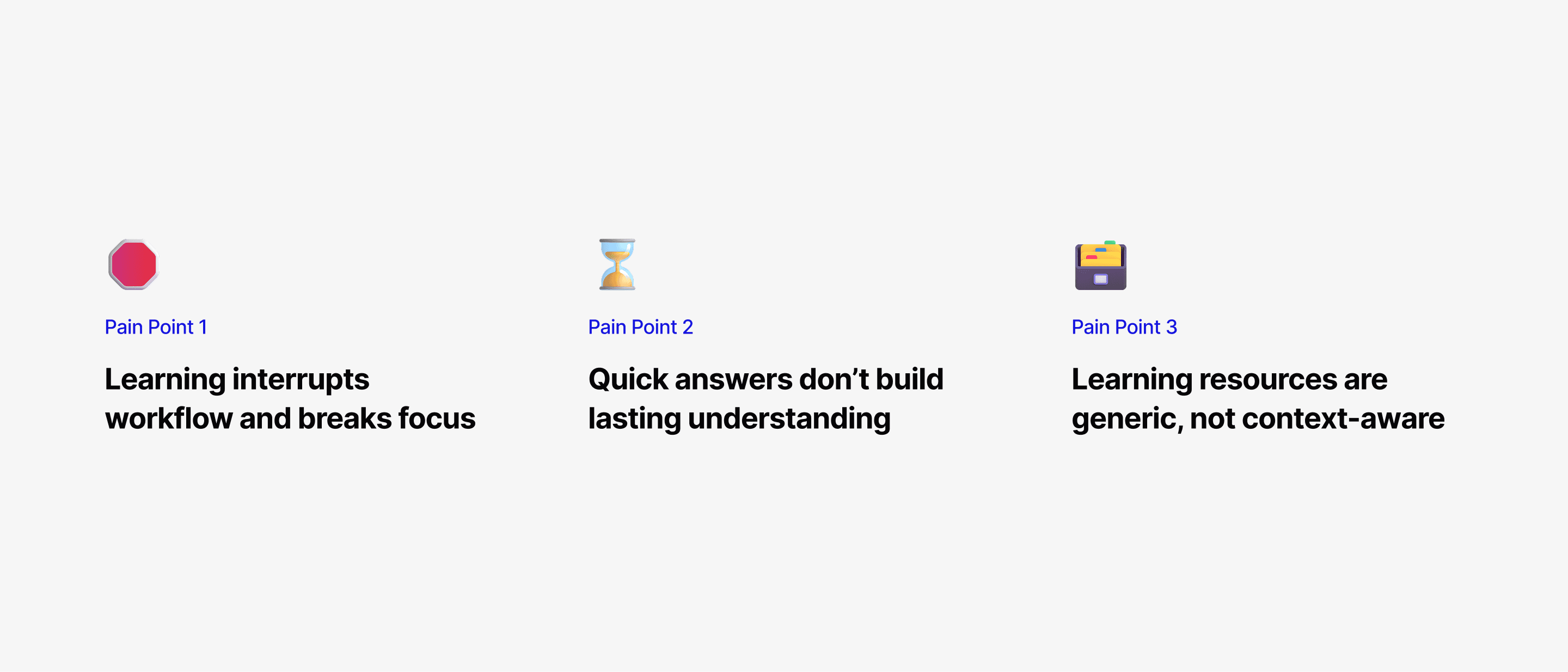
We obtained the following key pain points from users:
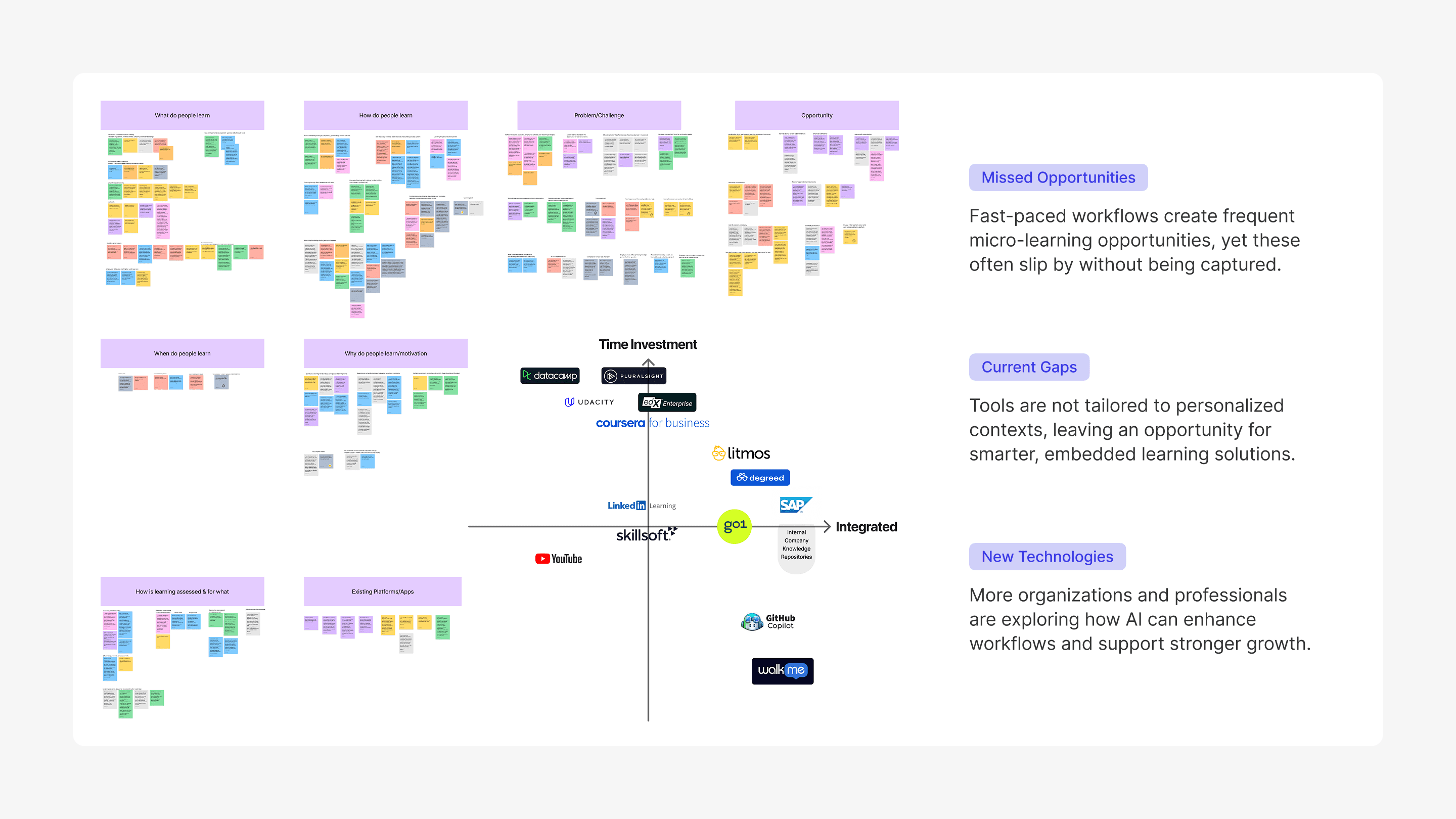
These research insights and pain points synthesized into our guiding question:
How might we deliver personalized, just-in-time learning that helps data scientists overcome blockers, build lasting skills, and stay productive, without disrupting their workflow?
Early Explorations and Testings
Working in Agile, I ideated through whiteboarding and lo-fi wireframes to explore diverse design opportunities. I then consolidated ideas into lo-fi prototypes for rapid experience testing, helping the team navigate the initial ambiguities and converge on clear design directions.
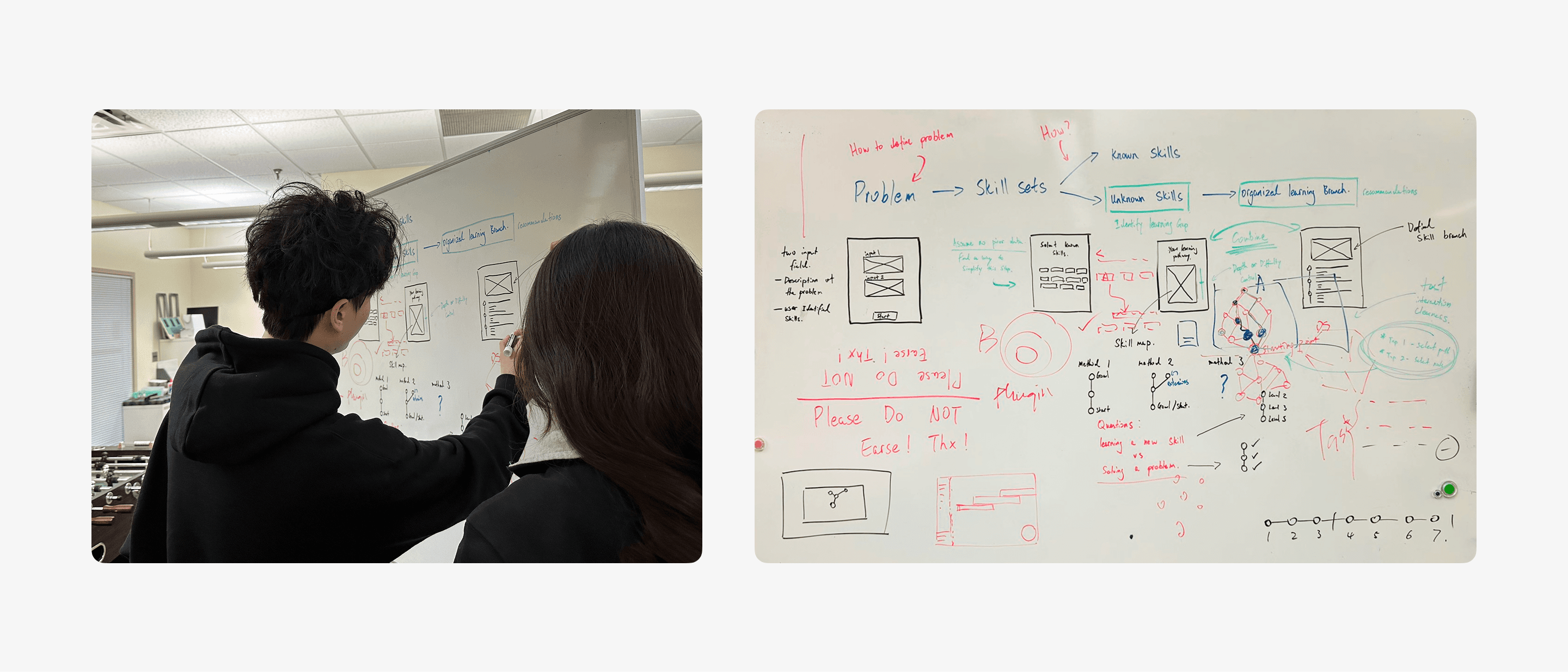
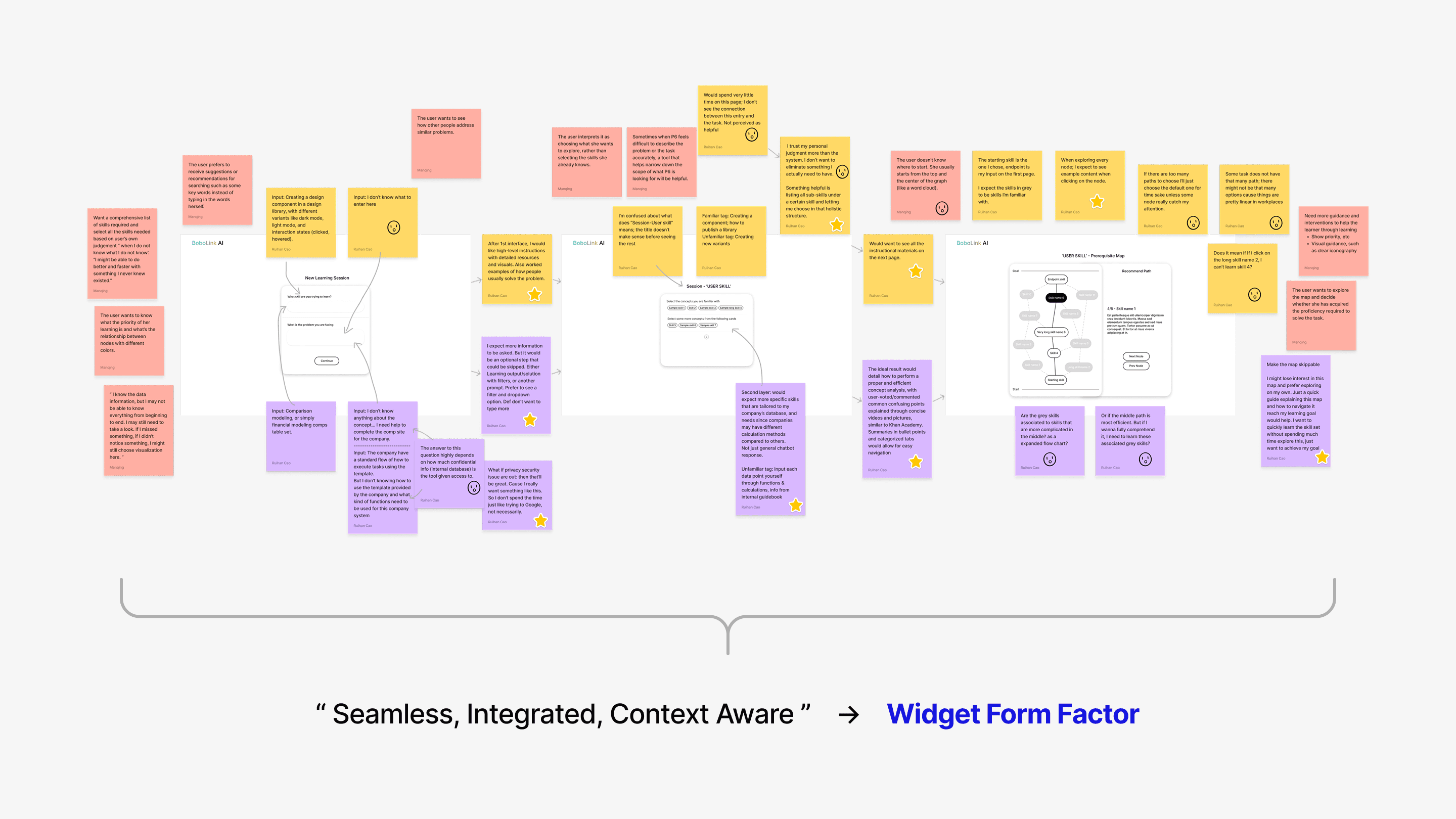
Through user feeds and internal critiques, I made the key decision to design Bobolink as a widget rather than a traditional web app. Aiming for a more seamless, integrated experience that better targets user pain points.
Narrowing the Focus
As we converged on design ideas, I created storyboards and user flows to visualize the user journey, clarify interactions, and ensure the team was aligned on a shared direction that met business objectives, user needs and stakeholder priorities.
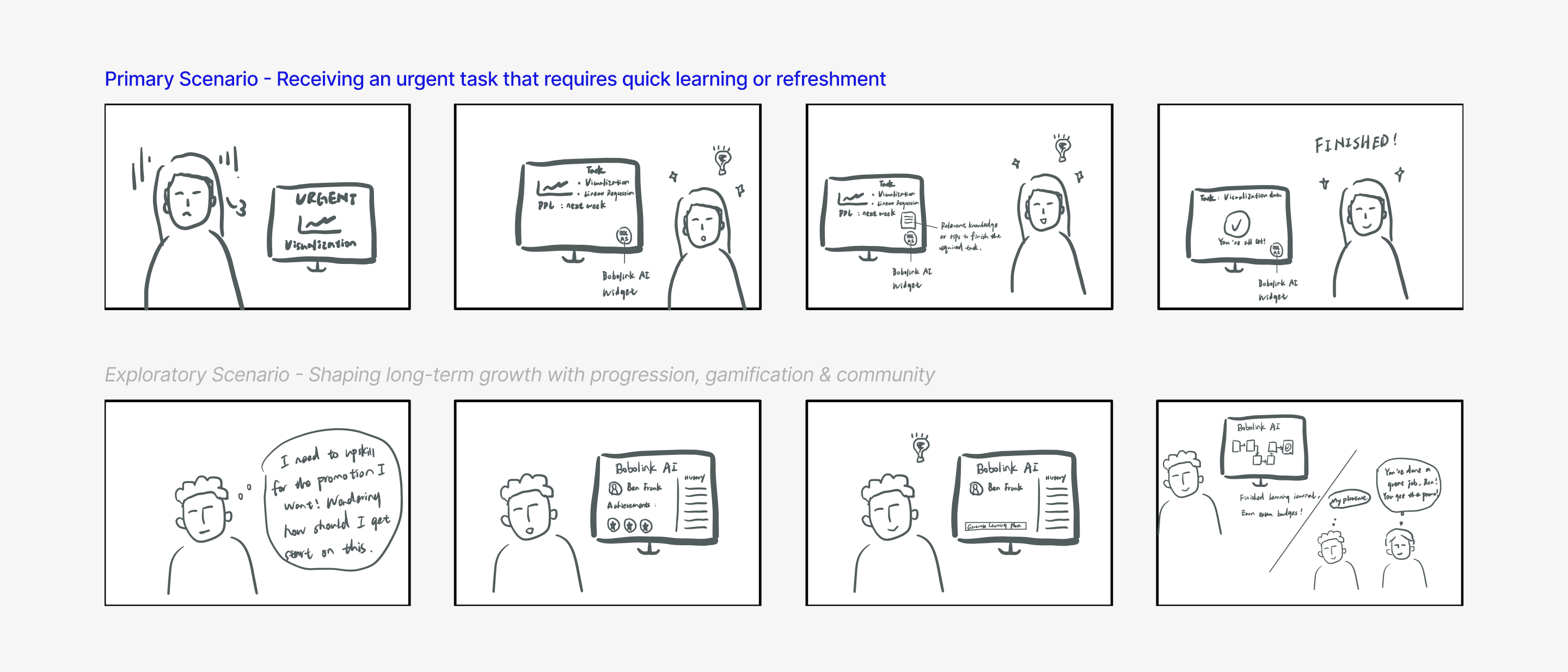
We developed and tested two concepts for our defined use case:
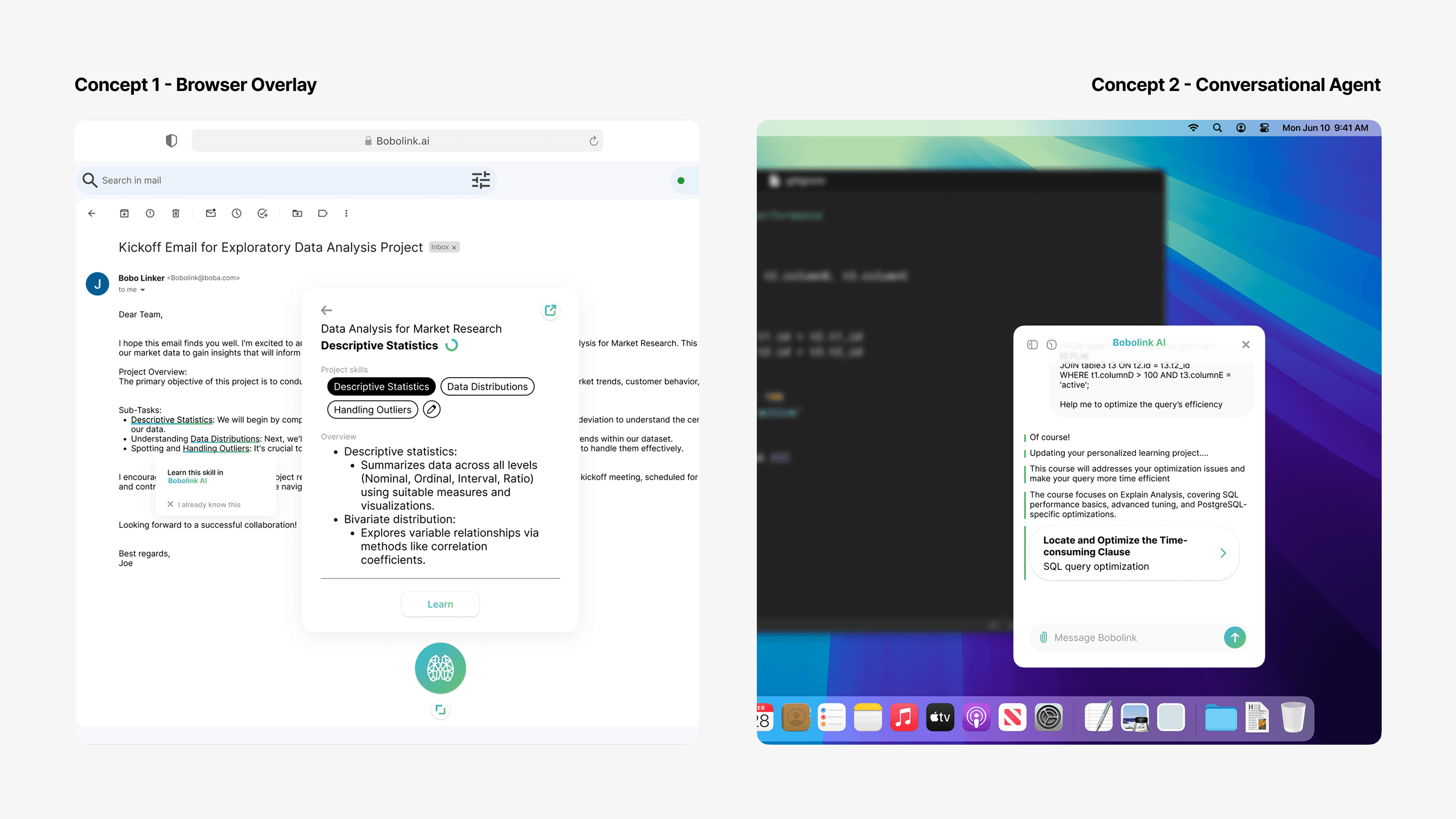
Through internal critiques and quick user interviews, we moved forward with Concept 2, which offered better personalization, versatility, and technical feasibility.
Key Design Decisions
Modular Interface & Information Architecture
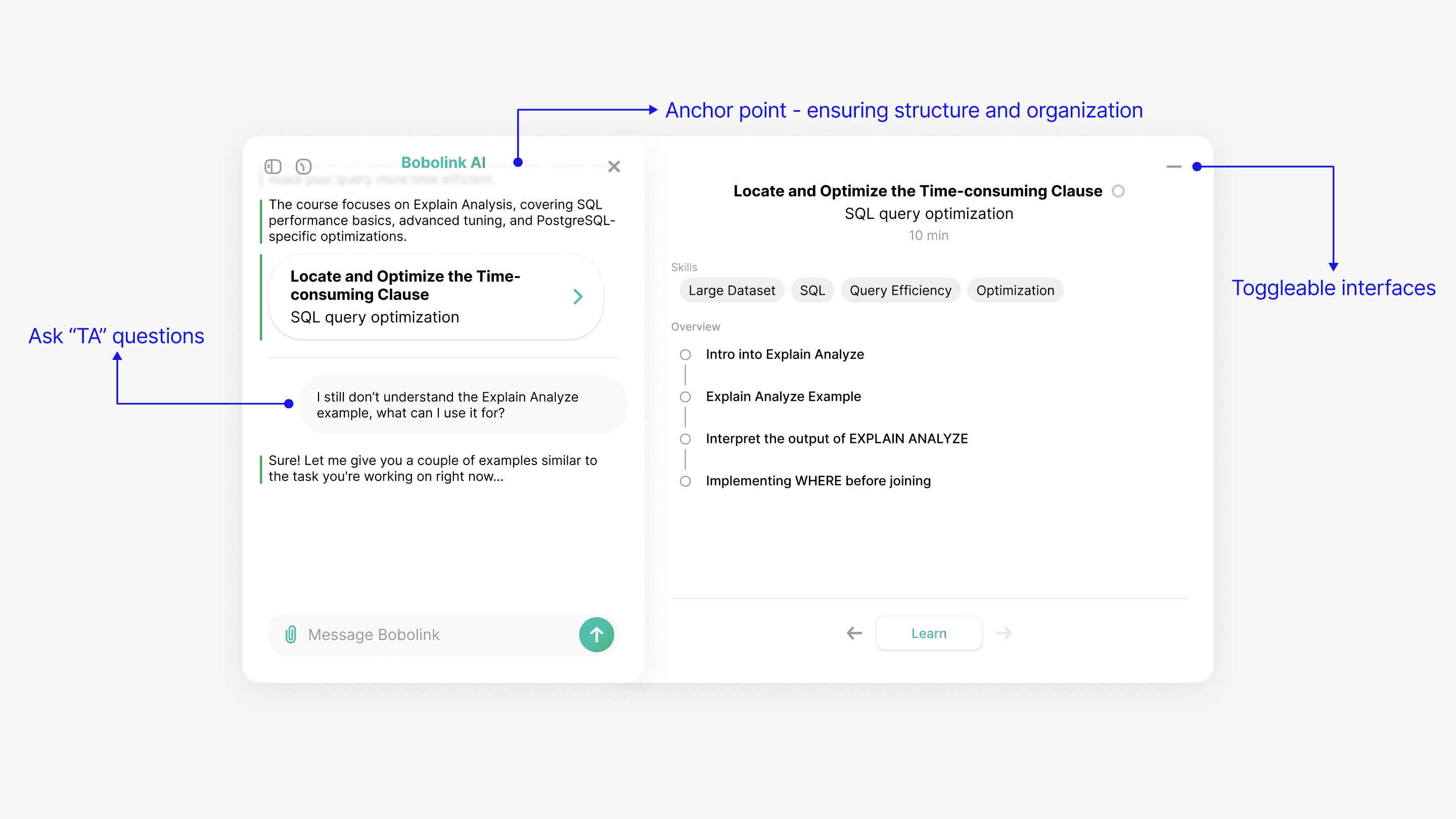
Early prototypes crammed everything into a single chat view, causing disorientation and high interaction costs. I restructured a modular layout: chat as the anchor, with information and screens extending from it. This improved orientation, lowered cognitive load, and allowed users to control what content they see.
Balancing Direct Support with Deeper Learning
To foster transferable learning without simply giving direct answers, I combined UX writing with conversational design to create a bite-sized, just-in-time lesson format. These were paired with multimedia elements to support varied user preferences.
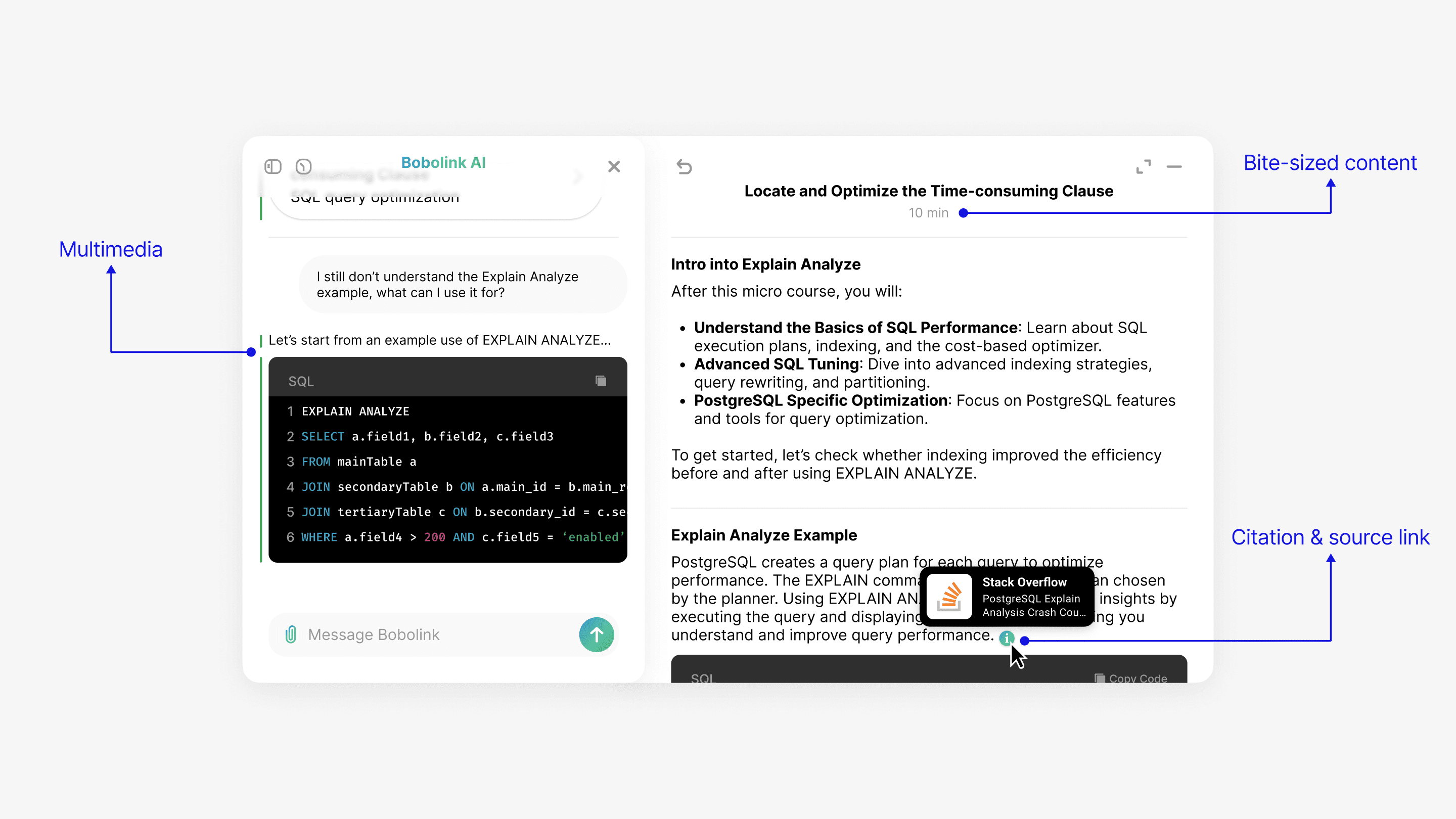
To build credibility, I introduced source citations directly in the interface, enabling users to verify information and explore further. This not only enhanced trust but also prompted user autonomy. (notably, we implemented this before citations became common in AI tools.)
Navigation & Control
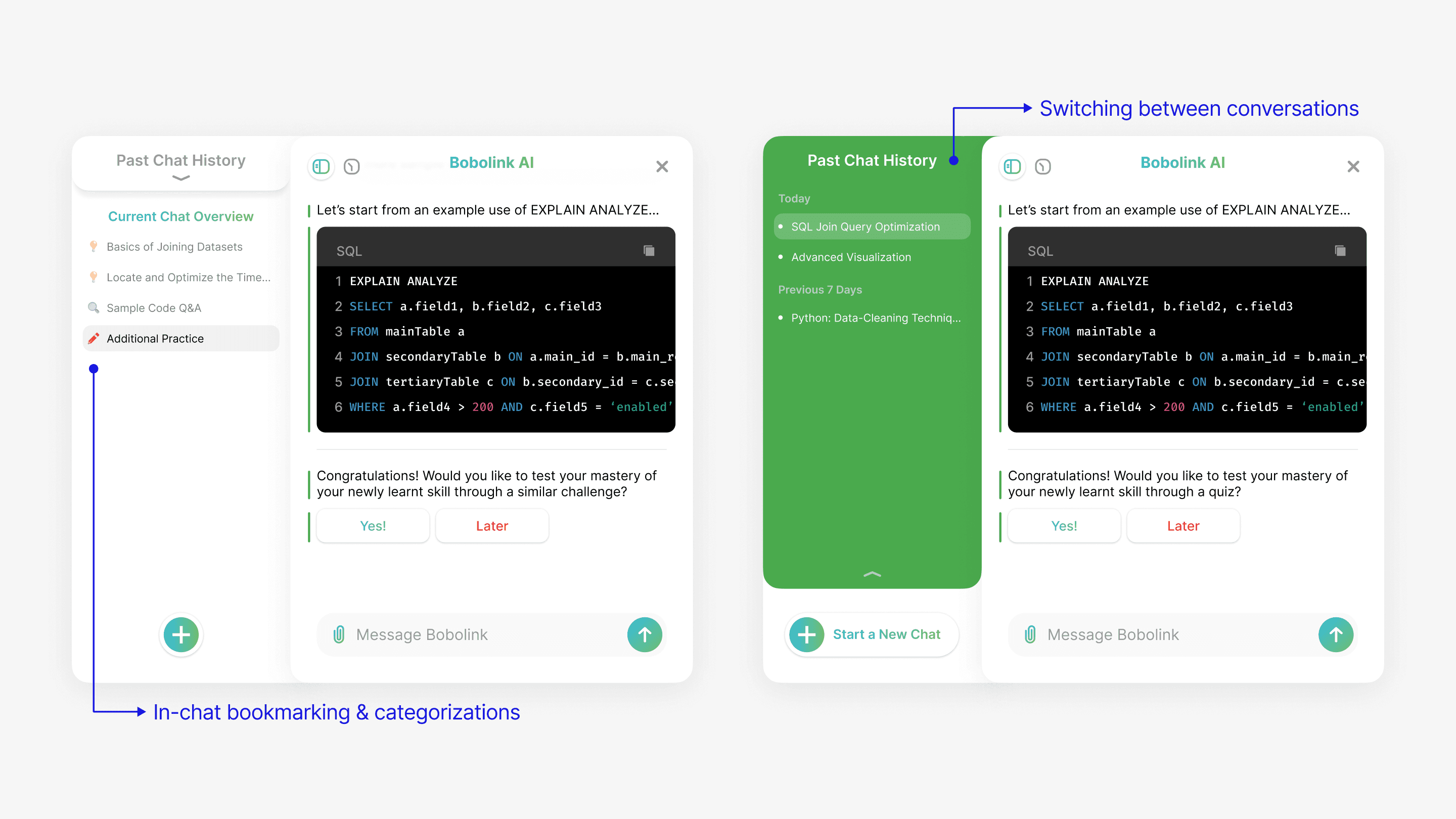
Users struggled to locate key information in lengthy conversations. Inspired by physical book annotations, I design in-chat bookmarks that organize content into clear structures. This design improved wayfinding while helping users to stay in control.
Testing with AI Dynamics
Testing a dynamic, AI-driven product was challenging. I wrapped Bobolink’s core model into a GPT wrapper alongside our prototype, allowing realistic content generation during sessions. This hybrid approach gave us meaningful feedback while enabling rapid iterations.
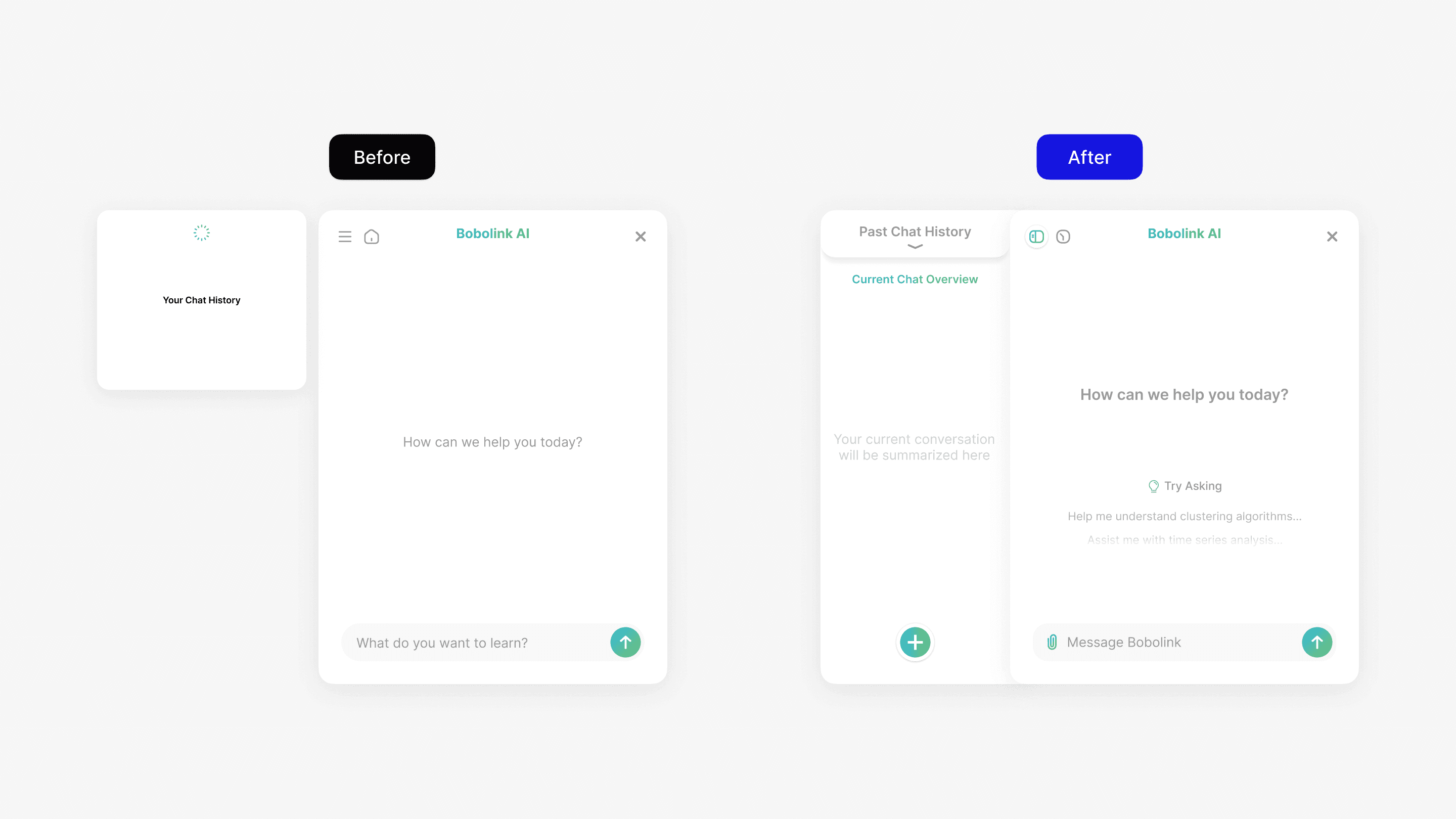
Through usability testing, we improved visual affordance, onboarding, default states, and UX writing—ultimately shaping the experience into a usable, desirable MVP.
05
Always Room for Reflections
This project has been a significant growth opportunity for me. Leading the design from conceptualization to productization was challenging, but working with a capable team on advanced technology we’re passionate about helped us navigate uncertainties and turn the unknown into possibilities.
In addition to honing various design skills and practices, I gained valuable experience across all stages of product design—from collaborating with the research team on conducting research, user interviews, and usability testing to create data-informed design, to working with the development team to build scalable design systems and PRDs.
I also became more proficient in continuously learning and improving as the project progressed, embracing and adapting to various changes and shifts.